
Settlements for unpaid wages have no fixed average because every wage claim is different. The amount you may recover depends on how much you were underpaid, how long the violation lasted, and whether your claim involves liquidated damages or state-law penalties. For employees, understanding your rights and potential recovery can help you decide what to do next.
At My Job Lawyer, helping workers fight employment violations is at the core of our practice. Our attorneys bring more than 25 years of experience, helping us win over 500 cases and recover more than $10 million for clients. We investigate the facts, calculate the final compensation you may be entitled to, and pursue the full recovery available under applicable federal and state law. If your employer has failed to pay you what you earned, contact us for a free case review to learn what options may be available to you.
In this article, we explain what counts as unpaid wages, typical settlement amounts, and the factors that may affect your recovery.
What Are Unpaid Wages?

Unpaid wages are simply compensation you’ve legally earned but haven’t been paid. If you’ve worked hours for which you weren’t properly paid, your employer may be violating federal, state, or local wage laws. Depending on the circumstances, this may amount to wage theft.
Wage theft can take several forms, and it is not always as obvious as an employer simply refusing to issue a paycheck. The table below explains some of the common examples:
If any of these situations sound familiar, you may be entitled to recover unpaid wages. The problem isn’t always obvious, as employees can lose money through off-the-clock work, incorrect overtime calculations, unlawful deductions, minimum wage violations, or unpaid final wages.
The first step is to identify what you were paid, what you should have been paid, and which wage laws apply to your situation. From there, you can determine whether you have a claim and what compensation you may be entitled to recover.
What Is the Average Settlement for Unpaid Wages?
There is no fixed average settlement for unpaid wages because every wage claim is different. One employee may be owed a few hundred dollars from a missed paycheck, while another may have years of unpaid overtime and additional damages. The amount you may recover depends on how much you were underpaid, and which federal law or state laws apply to your claim.
There is, however, federal data that can give you a useful point of reference. In fiscal year 2025, the U.S. Department of Labor’s Wage and Hour Division recovered $259.3 million in back wages for 176,957 workers, averaging about $1,465 per worker.
Keep in mind that $1,465 is not the average settlement for a private unpaid wage lawsuit. It is the average amount of back wages recovered per worker through the Department of Labor’s enforcement activities. Private claims can result in higher or lower amounts depending on the facts, evidence available, number of unpaid hours, and any additional damages available under applicable law.
The difference can become significant when overtime or other damages are involved. For example, the DOL reported recovering $184.4 million in FLSA back wages for 145,798 employees during fiscal year 2025. The Fair Labor Standards Act can also allow eligible employees to recover liquidated damages equal to their unpaid wages in qualifying cases. This may substantially increase the total recovery amount.
That means the amount your employer owes you is only the starting point. If you were denied overtime, paid below the required local minimum wage, or had wages unlawfully withheld, additional damages or penalties may apply. Your potential settlement will ultimately depend on the amount of wages owed, the strength of your evidence, and the remedies available under the laws that apply to your case.
What Factors Influence the Settlement Amount for Unpaid Wages?
Not every unpaid wage claim is worth the same amount. A single missed paycheck is very different from months of unpaid overtime. The laws involved, the strength of your evidence, and the employer’s conduct can also affect the value of your claim.
The factors that shape your settlement amount usually start with the amount of unpaid wages. If your employer owes you for months of unpaid hours, overtime, or improper deductions, your potential recovery can grow quickly. The longer the violation stayed, the more wages you may be entitled to.
The type of violation matters too. Eligible employees with FLSA overtime or minimum wage claims may recover liquidated damages equal to their unpaid wages. State laws may also provide additional penalties or other remedies, depending on where you work and what your employer did.
The evidence behind your claim can also affect how much you recover. Pay stubs, timesheets, schedules, emails, text messages, and other records can help show how much you worked and what you were paid. If those records are missing, proving your claim may be more difficult. Clear documentation can also strengthen your position when negotiating a higher settlement.
The number of employees affected may also increase an employer’s potential liability. If several employees experienced the same wage violation, their claims may sometimes be pursued collectively or through a class action lawsuit. That does not mean every employee receives the same amount, since individual losses still matter. An employer’s financial resources can also influence settlement negotiations and amount.
Finally, the strength of your claim and the employer’s defenses can affect settlement negotiations. An employer may dispute your hours, classification, or whether certain wages were owed. An employment attorney can review the facts, calculate your potential damages, address those defenses, and negotiate for the compensation available under the applicable law.
Ultimately, there is no single formula for every unpaid wage settlement. Your unpaid wages, the length and type of violation, available damages, and evidence all help determine what your claim may be worth.
How to Calculate Your Unpaid Wage Settlement
Calculating an unpaid wage claim starts with determining how many hours you worked, how much you should have been paid, and which wage laws apply to your situation. Start by accounting for all the time you worked, including off-the-clock hours or shifts that were not reflected in your employer’s records.
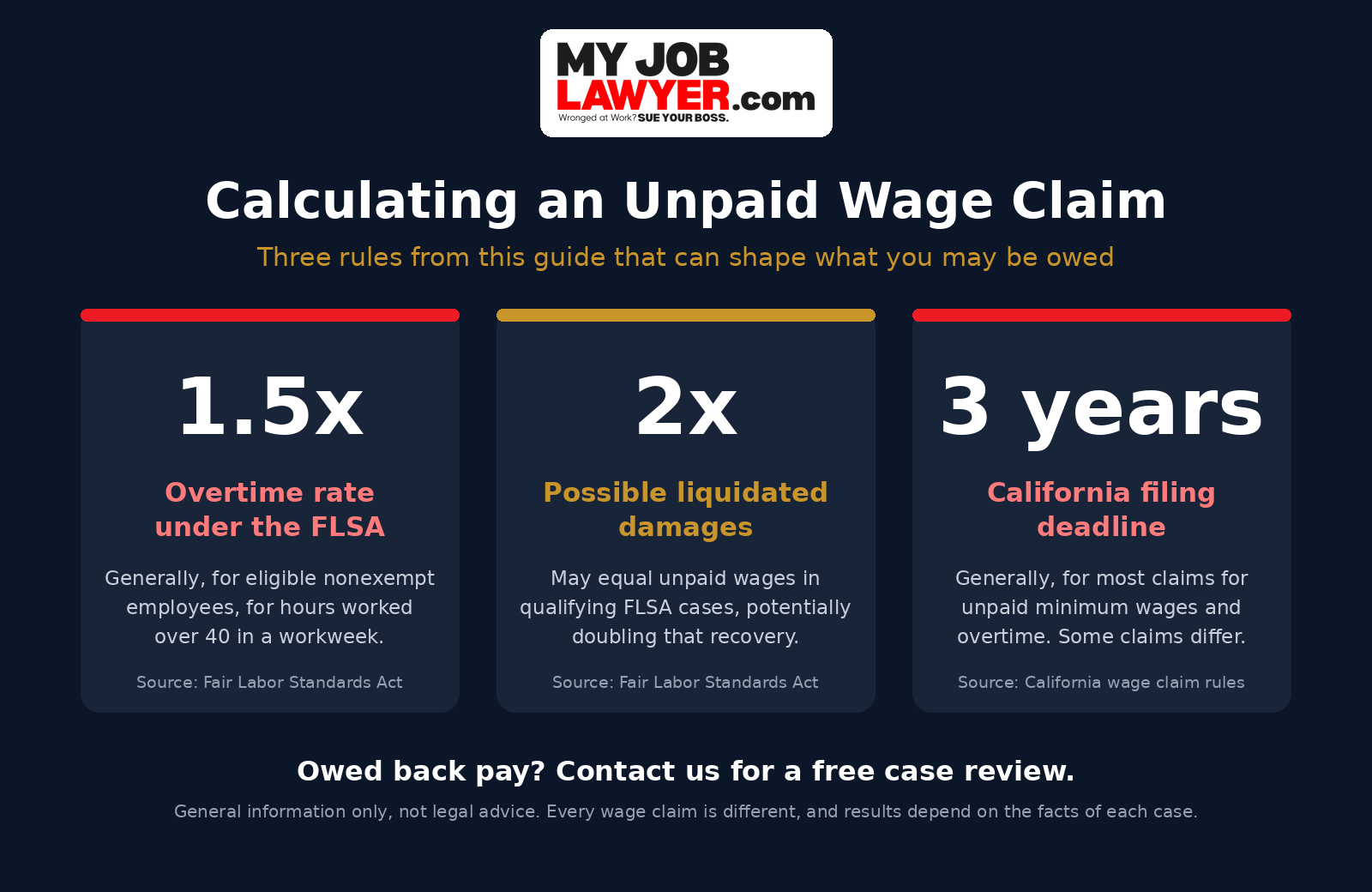
Next, calculate unpaid overtime. Under the Fair Labor Standards Act (FLSA), eligible nonexempt employees generally must receive overtime pay at one and one-half times their regular rate for hours worked over 40 in a workweek. Some states provide additional overtime protections. Multiply your qualifying overtime hours by the applicable overtime rate to estimate the overtime wages you are owed.
Additional damages may also apply depending on the law governing your claim. Some states allow interest or additional penalties on unpaid wages. Under the FLSA, non-exempt employees may also be entitled to liquidated damages equal to the amount of unpaid wages, potentially doubling the recovery for those wages.
You should also consider attorneys’ fees and litigation costs. In qualifying FLSA cases, an employee who prevails may be entitled to recover reasonable attorneys’ fees and certain litigation costs from the employer.
Your estimated unpaid wage claim may therefore include unpaid regular wages, unpaid overtime, liquidated damages, and applicable state-law penalties or other damages. The actual settlement amount may be different because it can depend on the evidence, applicable federal and state laws, the employer’s defenses, and the outcome of negotiations or litigation.
Can You Sue for Unpaid Wages?

Yes, you can sue your employer if they fail to pay wages you legally earned. That may include unpaid overtime, minimum wage violations, improper deductions, or wages withheld from your final paycheck.
You may have more than one way to recover unpaid wages. Depending on your situation, you can file a complaint with the U.S. Department of Labor, contact your state’s labor agency, or pursue a private lawsuit. The right approach depends on the type of violation, the laws that apply, and how your employer responds.
Before taking action, gather anything that can show what you worked and what you were paid. Pay stubs, timesheets, schedules, work logs, emails, and text messages can all help support your claim. Even personal records can be useful when they help establish the hours you worked or wages you were owed.
If your employer refuses to pay, an employment attorney can review your records and explain your options. In some cases, you may be able to resolve the dispute through a settlement without going to trial. And if your employer retaliates against you for asserting your protected wage rights, that may also create a separate legal claim. Employers generally cannot fire or demote employees simply because they filed a wage claim. Workers may have legal protections against this type of retaliation.
How Long Do Unpaid Wage Claims Take to Settle?
Some unpaid wage claims can settle within a few weeks, while others can take several months or longer. A straightforward claim with clear records and little disagreement may be resolved in roughly 4 to 8 weeks. But if your employer disputes the hours worked, the amount owed, or whether a violation occurred, settlement could take several months.
The strength of your evidence and your employer’s response can make a difference too. Clear pay records, timesheets, and other documentation can help establish what you are owed. More complicated claims involving multiple employees, disputed facts, or a lawsuit can take 3 to 12 months or longer, depending on how the case develops. These are only general estimates, not guaranteed timelines, since every wage claim follows a different path.
How to Strengthen Your Unpaid Wage Claim

If you want to strengthen your unpaid wage claim, start with the basics and document everything. Save your pay stubs, clock-in records, text messages, and emails. Even if they seem small, these details can paint a bigger picture of wage theft.
Second, act fast. Every state has a statute of limitations for filing wage claims. In California, most claims for unpaid minimum wages and overtime must generally be filed within three years of the violation. Some wage claims have different deadlines, depending on the type of claim. In some states, that limit is as short as two years. The longer you wait, the harder it can be to recover compensation.
Third, speak with an employment lawyer as early as possible. Even a free consultation can help you understand your rights and next steps. Finally, be persistent. Don’t let your employer talk you out of what you’ve earned. If you feel dismissed or ignored, seek legal help.
How Can an Employment Lawyer Help You?
An employment lawyer can help you understand what you can do about the wages you are owed. Wage laws can be difficult to navigate, especially when your employer disputes your hours, classification, or pay. An attorney can review your situation, explain your legal options, and calculate your potential wage claim.
They can look at your pay records, hours worked, unpaid overtime, deductions, and any additional damages that may apply. If your employer refuses to resolve the issue, an attorney can also represent you in negotiations or, when necessary, in a legal proceeding.
For example, suppose you regularly worked 50 hours a week but your employer paid you only for 40. You may know you were working extra hours, but you may not know how to calculate the overtime you are owed or prove those hours. An employment lawyer could review your pay stubs, schedules, time records, and messages about your work hours, then calculate the unpaid overtime and any additional damages that may apply. If the employer disputes the claim, the attorney can handle those discussions and help you pursue the compensation available under the law.
Need Help Understanding Your Unpaid Wage Settlement?
If you’ve been underpaid, whether through unpaid overtime, illegal deductions, or missing your final paycheck, you may be entitled to far more than just back wages. Settlements for unpaid wages often include liquidated damages, interest, and attorney’s fees, which can significantly increase your total recovery. Understanding how settlements work, what factors influence them, and how to calculate what you’re owed is important if you want a fair outcome.
However, knowing your rights isn’t enough; acting quickly is just as important. Every state has strict deadlines for filing a wage and hour violations claim, and waiting too long could cost you everything you’re rightfully owed. Keep detailed records, calculate what’s missing, and don’t hesitate to seek legal recourse when necessary.
At My Job Lawyer, our employment lawyers have won over 500 cases and recovered more than $ 10 million for clients. We can help you understand your options, calculate what you may be owed, and pursue your claim on a contingency fee basis. Contact us for a free case review and learn what steps you can take to recover the wages you earned.
Frequently Asked Questions
When you’re dealing with unpaid wage cases, it’s normal to have questions. Below are straightforward answers to some of the common concerns workers have when it comes to wage theft.
What Happens if I Sue My Employer for Not Paying Me?
If you sue, your employer may be required to pay back wages, liquidated damages, and even your attorney’s fees. Most cases settle out of court, but some go to trial.
What Is the Law on Unpaid Wages?
Both federal wage laws (like the Fair Labor Standards Act) and state labor laws require employers to pay missing wages for all hours worked, including overtime hours, and forbid illegal deductions or withholding of your final paycheck.
How Long Does an Unpaid Wage Lawsuit Typically Take?
It depends. Some wage and hour claims settle in a few months, while others can take a year or more. Well-documented claims tend to move faster.
How Much Can You Recover for Unpaid Wages?
You can typically recover the lost wages, plus liquidated damages, interest, and legal fees. Settlement amounts vary, but many range from a few hundred to tens of thousands of dollars, depending on your case.
Can You Be Fired for Filing a Wage Claim?
No. It’s illegal for an employer to retaliate against you for asserting your rights or filing a wage dispute. If they do, you may have grounds for an additional legal claim.
Do You Have to Pay Taxes on Unpaid Wage Settlements?
Yes, typically. Back pay and overtime pay recovered through a settlement are considered taxable income. Your attorney can help you understand how taxes apply to your specific case.
Is It Expensive to Hire an Attorney for Wage Claims?
Most employment lawyers work on a contingency basis, meaning you pay nothing up front. They only get paid if you win, so there’s little financial risk in pursuing legal action.
Disclaimer: This article provides general information about unpaid wages and wage-and-hour laws. It is not legal advice and does not create an attorney-client relationship. Wage laws and available remedies vary by state and individual circumstances, and the information in this article may not apply to your situation. For advice about your specific claim, speak with a qualified employment attorney.